AI Training for Small Business Teams
Practical AI training that turns scattered experimentation into consistent, team-wide capability
AI tools are everywhere, but most teams are still guessing how to use them.
One person experiments. Another ignores it. Workflows break. Results vary.
Who This AI Training Is Designed For
My AI training moves small business teams from each person experimenting alone to everyone using AI the same way. Your team comes out confident with AI and consistent in how they use it.
It is a fit if:
- ✓ Your team is using AI inconsistently or unofficially
- ✓ Knowledge lives in one or two people's heads
- ✓ Tools were adopted without clear workflows
- ✓ Leadership wants productivity gains without risk or chaos
- ✓ You want AI to support operations, not disrupt them
It is not a fit if:
- ✗ You are looking for prompt lists or generic AI tutorials
- ✗ You want a self-serve course with no context
- ✗ You are not ready to involve your team
Why Most AI Training Fails Teams
Most AI training is built for individuals, not organizations.
Teams attend a workshop, watch a course, or receive a document. Then everyone goes back to work and does things their own way. Without shared language, defined use cases, and agreed boundaries, AI becomes another fragmented tool.
Training fails when:
- × There is no connection to real workflows
- × Everyone learns different techniques
- × No standards or expectations exist
- × Leadership cannot see what is actually changing
AI training works when the whole team learns it together.
My Approach to AI Training
I train teams the same way I help businesses adopt new systems.
First, I learn how the work actually happens. Then I teach AI in the context of roles, responsibilities, and real tasks.
Role-based use cases, not generic demos
Training tailored to how different roles actually work in your business.
Shared principles for when and how to use AI
Clear guidelines the entire team understands and follows.
Practical workflows your team can repeat
Documented processes that create consistency and reliability.
Clear guardrails to reduce risk and misuse
Boundaries that protect your business and maintain quality.
This is not a one-size-fits-all curriculum. Training is tailored to how your business operates.
What Your Team Learns
AI Fundamentals for Teams
How modern AI systems work, what they are good at, and where they fail. Enough understanding to use AI confidently without technical depth.
Using AI in Daily Work
Practical applications tied to real tasks. Documentation, communication, research, analysis, and decision support.
Thinking With AI
How to structure problems, ask better questions, and evaluate outputs instead of blindly trusting results.
Consistency and Standards
Shared approaches so outputs are reliable across the team, not dependent on individual skill levels.
Risk and Boundaries
When not to use AI, what data should never be shared, and how to avoid common mistakes.
AI Training Formats
Training is delivered in formats that fit your team size and maturity.
Live workshops for leadership or full teams
Interactive sessions that build shared understanding and immediate buy-in.
Role-specific sessions for operations, marketing, and admin
AI training built around what each role actually does.
Hands-on working sessions using your real workflows
Practice with actual business processes, not hypothetical examples.
Follow-up sessions to reinforce adoption
Support that ensures training translates to changed behavior.
Most engagements combine training with light implementation guidance so learning turns into action.
What training costs
$1,500Delivered remotely. Live workshops, hands-on sessions using your own workflows, and follow-up so it survives contact with a busy week. Fixed price, agreed in writing before anything starts.
You can book AI training on its own. It is also a natural place to start when a full build feels too big.
Onsite delivery is possible. Travel and accommodation are covered by the client at cost, agreed before booking.
Ask about AI training for your teamHow AI Training Fits With AI Readiness Audits
Training works best when it is informed by context.
If you don't know which team to train first, an AI Readiness Audit can show you:
- → Where AI will have the most impact
- → Which teams need training first
- → What risks or gaps exist today
Training then focuses on the areas that matter most, instead of generic education.
If you already know your priorities, training can stand alone. If not, an audit provides clarity before scaling.
What Businesses See After Training
More consistent use of AI across the team
Less reliance on one "AI person"
Faster execution without added headcount
Clearer documentation and workflows
Greater confidence in AI-assisted work
This is about building capability, not chasing tools.
Build AI capability across your team
If you want your team using AI consistently and knowing where the limits are, this AI training is built for that.
Got it.
Your details are in. I read these myself and I will come back to you shortly.
Frequently Asked Questions
Is this training technical?
No. The training is designed for business teams, not developers. I explain AI concepts in business terms and focus on practical application, not technical implementation.
How long does training take?
Training length depends on your team size and goals. Most engagements range from a single half-day workshop to multiple sessions over a few weeks. I design the format to fit your schedule.
Can this work for non-technical teams?
Yes. This training is specifically designed for teams without technical backgrounds. I teach AI use in the context of everyday business tasks, not programming or data science.
Do you recommend starting with an audit?
It depends. If you already know which areas need AI adoption, training can stand alone. If you are unsure where to focus, an audit provides the context to make training more targeted and effective.
Is this remote or in-person?
Training can be delivered remotely or in-person, depending on your preference and location. Remote training works well for most teams and offers more scheduling flexibility.
What happens after the training?
You receive documentation, templates, and workflows your team can reference. Many clients also opt for follow-up sessions to address questions and reinforce adoption as the team gains experience.
More on Getting a Team to Actually Use AI
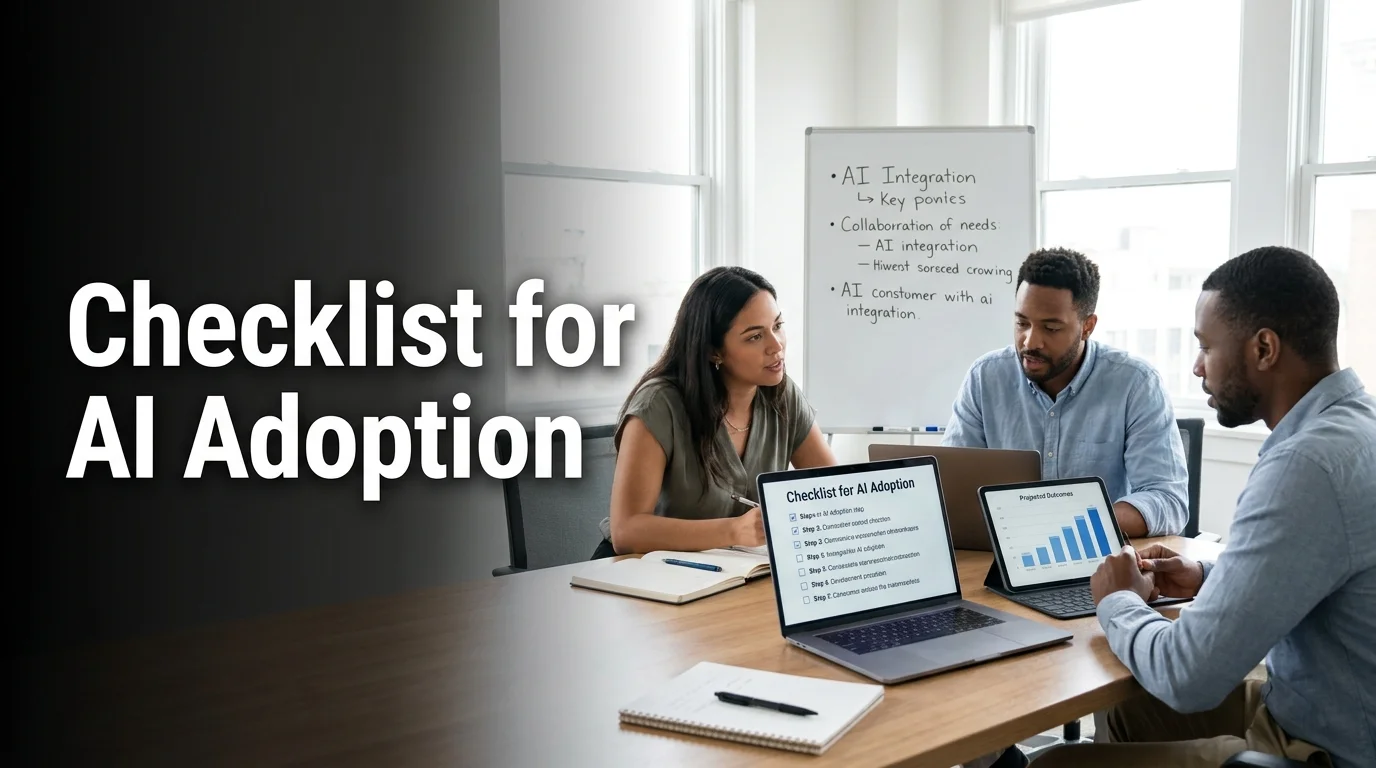
The Change Management Checklist for AI Adoption
AI adoption is a behavior change problem. Here is the checklist that treats it like one.
Read the checklist →
How to Run an AI Training Pilot Program
A structured pilot gives you evidence before you scale. How to design, run and evaluate one that tells you something useful.
Read the pilot guide →
How to Measure AI Training Success
If you cannot measure whether training is working, you cannot improve it or justify continuing it. A practical framework.
Read the metrics framework →