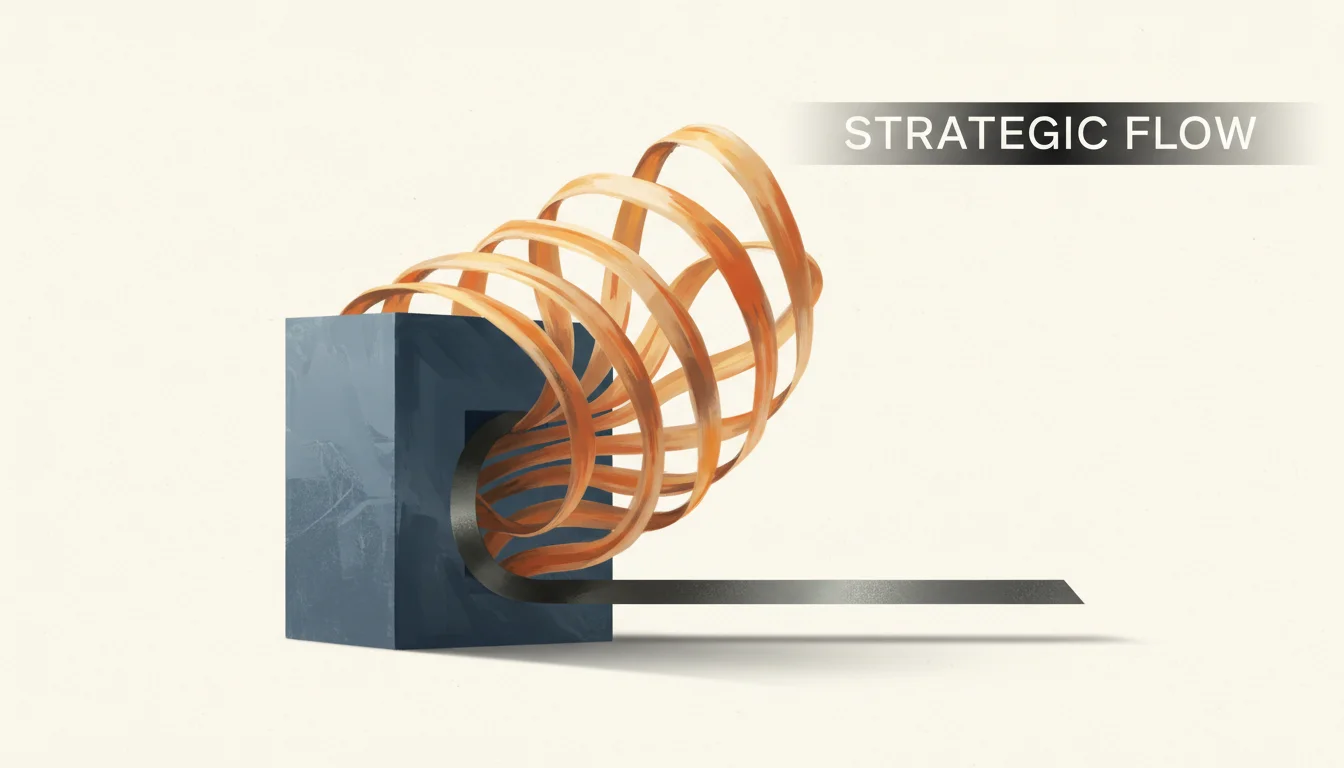
Working and Helping Are Not the Same Thing: What Separates Useful Automation From Expensive Theater
Most businesses think automation is something you buy.
You find a tool, connect it to your systems, and suddenly work happens faster. The promise is simple. In practice it gets messier.
When automation fails, it is rarely because the software broke. It fails because the business automated the wrong thing, or automated it for the wrong reason.
Automation is a strategic decision that changes how your business operates.
The Automation Misconception
The typical approach to automation starts with software.
Someone discovers Zapier, or n8n, or Make. They get excited about connecting apps. They build workflows that feel productive. A form submission triggers a Slack message. A sale creates a task. An email generates a spreadsheet row.
These automations work, technically. The tools perform exactly as designed.
But working and helping are different things.
When you treat automation as a tool, you focus on what the software can do instead of what your business actually needs. You automate because you can, not because you should.
This creates fragility. Workflows stack on top of each other without coordination. No one understands how the pieces connect. When something breaks, the person who built it is the only one who knows how to fix it.
That is technical debt with a timer.
Automation Changes How Decisions Are Made
Every time you automate a process, you are making a decision about how work should happen.
You are locking in assumptions about roles, timing, and dependencies. You are deciding what gets attention and what gets ignored. You are encoding judgment into software that will run the same way every time, regardless of context.
This is powerful when done well. It creates consistency. It frees people to focus on work that requires judgment instead of repetition.
But it also means mistakes scale instantly.
If you automate a process that relies on bad data, you scale bad data. If you automate around a person instead of a system, you create a single point of failure. If you automate without understanding why the work exists in the first place, you risk making the wrong thing happen faster.
Reversing bad automation is expensive. You cannot just turn it off without disrupting operations. You have to understand what depends on it, what will break without it, and what should replace it.
Most businesses do not plan for that cost upfront. They assume automation can be adjusted later. By the time they realize it needs to be rethought, the system is too embedded to change easily.
Why Strategy Must Come Before Tools
Automation should start with a question, not a solution.
What problem are you actually solving? Is the problem a lack of speed, or a lack of clarity? Are you automating because the work is repetitive, or because you have not figured out a better way to do it?
If you automate chaos, you get faster chaos.
A messy workflow does not become clean just because software handles it. Unclear ownership does not become clear just because a task gets created automatically. Poor communication does not improve just because a notification goes out.
Automation makes existing systems more rigid. Poorly designed systems get harder to fix once they are automated.
This is why strategy must come first.
You need to understand what work should happen, who should do it, and what success looks like. You need to know what decisions require human judgment and what decisions can be encoded. You need to design for the system, not the individual.
Only then does automation become useful.
What Strategic Automation Actually Looks Like
Strategic automation does not start with tools. It starts with constraints and bottlenecks.
Where does work get stuck? Where do handoffs fail? Where does information get lost? These are the places automation can help, but only if the underlying process is sound.
Good automation supports judgment instead of replacing it. It removes friction so people can focus on decisions that matter. It makes work legible so anyone can understand what is happening and why.
Bad automation hides complexity. It creates dependencies that no one understands. It optimizes for speed without considering what happens when things go wrong.
The difference is not the tool. The difference is whether automation aligns with how the business actually operates.
Strategic automation requires diagnosis before implementation. You have to understand the system before you change it. You have to know what you are optimizing for and what tradeoffs you are willing to accept.
This takes longer upfront. It also prevents expensive mistakes later.
Automation Strategic Decision Examples
Here are three hypothetical examples of an automation strategic decision in business. They are illustrations, not client stories.
A 12-person service firm routes every new lead to the founder by email. The decision is who should own lead response, how fast it must happen, and what the system does when nobody replies. Once those answers exist, the automation is easy to build.
An agency wants invoices created automatically when a project closes. The decision comes first: who confirms a project is truly closed, and what happens to a disputed one? Without that rule, the automation sends wrong invoices faster.
A small distributor wants an order status email sent without staff involvement. The decision is which orders qualify, and which ones always get a human, such as large or unusual accounts.
In each case the strategic choice sits upstream of the software.
Frequently Asked Questions
Can you give me an example of an automated decision?
A rule that routes a support request by keyword is an automated decision. So is a system that approves a refund under a set dollar amount and sends anything larger to a person. Someone decided where the line sits, and the software now applies that line every time. That is why the line deserves more thought than the tool does.
What are the main types of strategic decisions in automation?
Three come up in almost every small business. Scope decisions settle which work gets automated and which stays human. Ownership decisions settle who maintains each workflow and who is told when it breaks. Exception decisions settle what happens when the input does not fit the rule. Tool choice comes after all three.
Where to Start
If you are thinking about automation, start by stepping back.
Before you look at tools, look at your operations. Understand how work moves through your business. Identify what creates friction and what creates real gains.
Ask yourself whether the problem is really speed, or whether it is clarity, alignment, or structure. Automation cannot fix those things. It can only amplify what is already there.
If you want a framework for these decisions, start with Automation Architecture for Small Teams. If you want help finding where automation fits in your business and where it does not, the free process audit maps your top 3 processes and prices your top 5 automation opportunities in dollars.
Good automation comes from strategic decisions that fit how your business works.
Do that well, and automation becomes a force multiplier. Skip it, and automation becomes another source of chaos.
Related reading: Automation Architecture for Small Teams · Process Mapping: The Foundation of Successful Automation